Examples
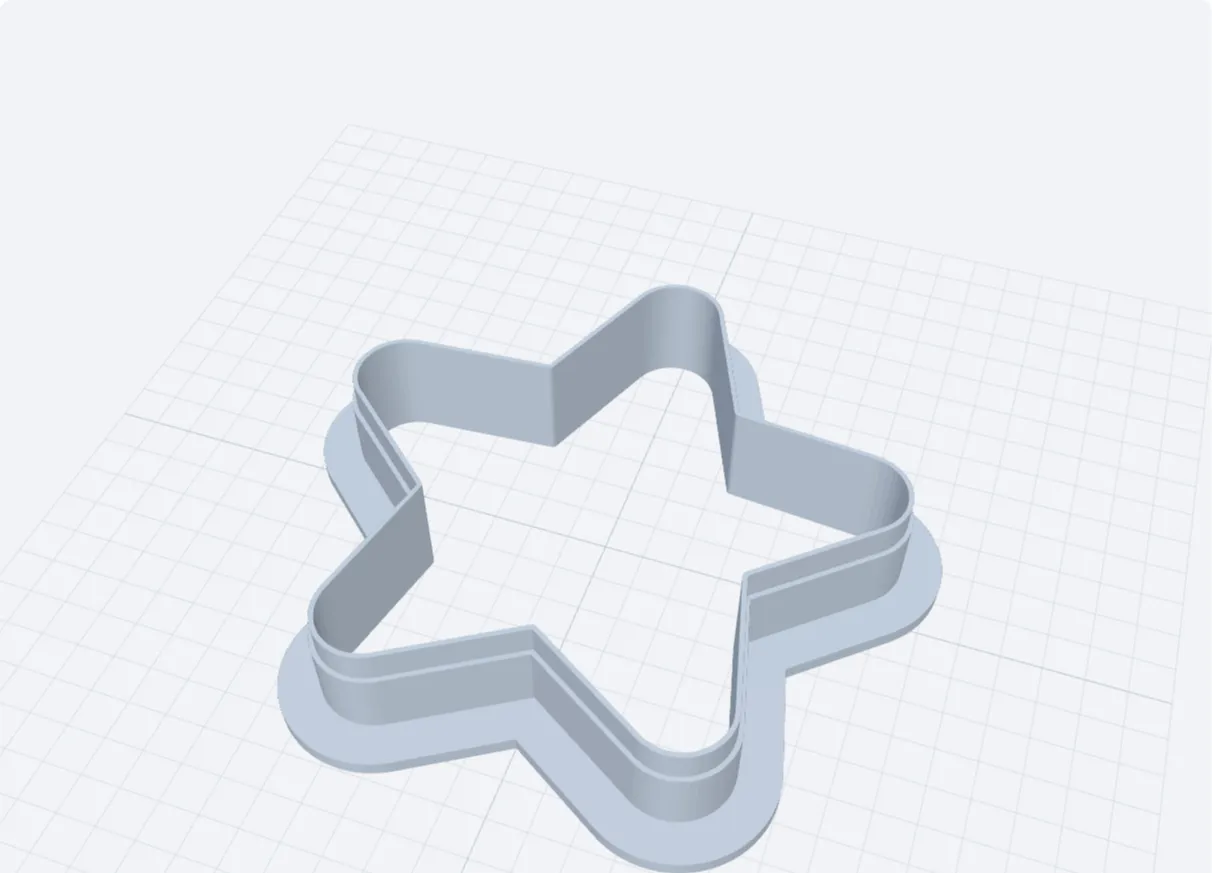 Star70 mm cookie, thin cutting edge
 Gingerbread man90 mm tall
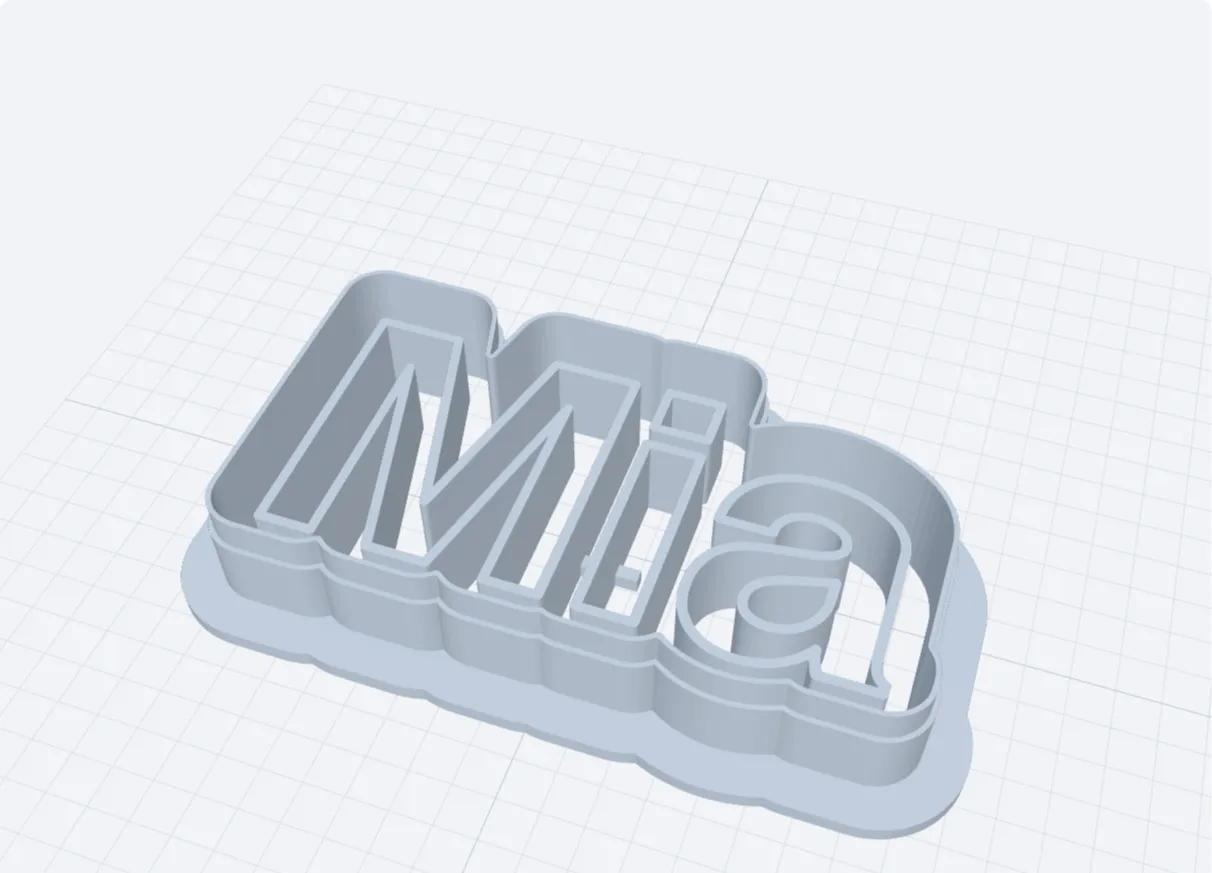 A nameLetters inside one rounded outline
These pictures are this tool's own preview, not photographs. Click one to open the tool with those settings. Printed something with it? Send a photo to hello@3dfiles.app and it can be shown here.
How to make a cookie cutter
- Choose a ready shape (heart, star, gingerbread man, Christmas tree, dog bone…), text such as a name, or your own picture or SVG.
- Set the cookie size – the longest side of the cookie itself, not the cutter. 60–90 mm is a typical biscuit.
- Keep the default 15 mm height for rolled dough up to about 8 mm thick.
- Download the STL or 3MF and print it flange-down. No supports are needed.
What the settings do
- Wall – thickness of the blade. 1.2 mm is three lines with a 0.4 mm nozzle: stiff, yet it cuts cleanly.
- Thin cutting edge – the last 4 mm of the blade is half as thick, so it slices through dough instead of squashing it.
- Grip flange – the wide rim on the print bed. It gives your palm something to press on and keeps the wall from flexing.
- Smallest detail – narrow notches and spikes smaller than this are smoothed out, because dough cannot follow them anyway and thin spikes break off.
- Imprint inner lines – holes in your picture (eyes, a heart inside a heart) become shorter walls that press a pattern into the cookie without cutting through.
Name and text cutters
Choose Text / a name: the letters are surrounded by one rounded outline that cuts the cookie, and the letters themselves are pressed into the surface. Short names (3–8 letters) at 80–120 mm read best. Thin bars on the top side hold letters such as "o" or "e" in place.
Printing tips
- Print with 0.2 mm layers, 3 walls and 100 % infill on the flange – it takes about 20–40 minutes and 6–12 g of filament.
- PLA is easiest and keeps a crisp edge. PETG is tougher and tolerates warmer water.
- Use a stainless-steel nozzle and a filament sold as food-contact safe if you can – brass nozzles may contain lead.
Is a 3D printed cookie cutter food safe?
Dough touches the cutter only for a moment, which is why printed cutters are widely used at home. Layer lines can still trap dough and bacteria, so: wash the cutter by hand in lukewarm soapy water right after use (PLA softens above about 55 °C – no dishwasher), let it dry fully, and replace it when it looks worn. For extra peace of mind, cut through a sheet of cling film laid on the dough, or use the cutter only for fondant and play-dough.
Common questions
What size should a cookie cutter be?
Most biscuit cutters make cookies 50–90 mm across. Children's and decorating cutters are often 40–60 mm; large gingerbread figures 100–150 mm.
How tall should a cookie cutter be?
12–15 mm is enough for rolled dough up to about 8 mm thick. Taller cutters use more filament and are harder to push out of the dough.
Can I make a cookie cutter from a photo?
Yes – use a clear silhouette or clip-art on a plain background. The picture is traced in your browser and never uploaded. See the image to cookie cutter page for tips.
Does it work in the dishwasher?
No. PLA and PETG deform in a hot dishwasher. Wash 3D printed cutters by hand in lukewarm water.
Is it free?
Yes – 2 downloads a day are free, unlimited with Pro.